Home Learn Water Damaged Ceiling Repair in 7 Steps
Buying 11 minute readWater Damaged Ceiling Repair in 7 Steps
By Anthony Limpert, Founder, published October 21, 2026
The roof is fixed but the ceiling is not. Seven steps in order, the Chicago and Illinois rules, and real work from a Chicago family remodeler.
A fixed roof does not fix the ceiling. Dry everything within 24 to 48 hours, cut out drywall that is soft or sagging, seal stains that stay hard, then prime and paint the whole ceiling. In Chicago you can swap up to 1,000 square feet of drywall or plaster with no building permit.
First Things
- Stop the water first. A patch on the roof comes before any work on the ceiling.
- Wet drywall, plaster and insulation need to dry within 24 to 48 hours, per the EPA.
- Hard and flat means seal and paint. Soft, bubbled or sagging means cut it out.
- A home built before 1978 may have lead paint. Paid crews must follow the EPA lead rule.
- In Illinois, home repair over 1,000 dollars needs a written contract and a rights pamphlet.
The Roof Is Fixed. The Water Is Still Inside.
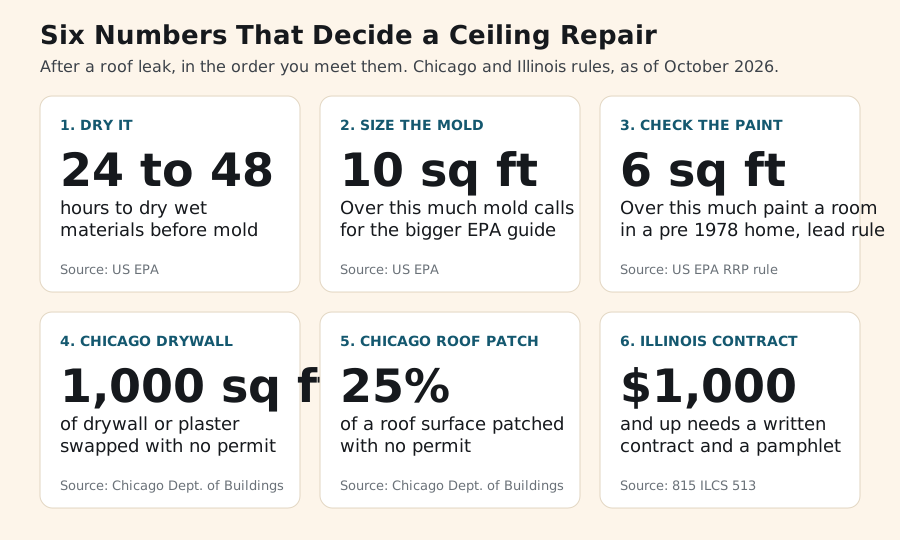
Most people think the leak is over once the roofer leaves. It is not. The EPA says water damaged areas need to dry within 24 to 48 hours to prevent mold. A roofer stops new water. Nobody on the roof dries the old water.
Water takes a path down. It soaks the decking, then the attic insulation, then the ceiling below. In a two story house it can follow a wall or a pipe all the way to the basement. Every layer it touched needs a look.
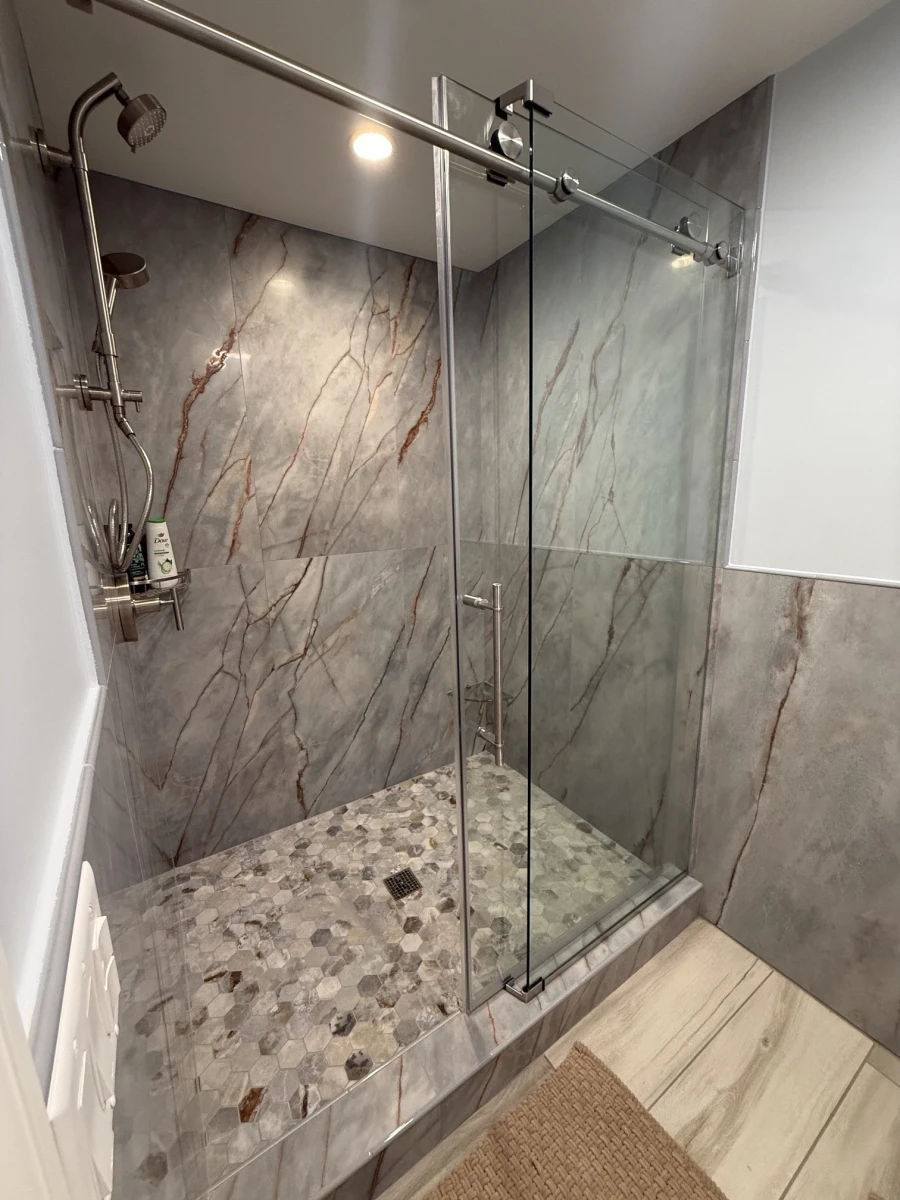
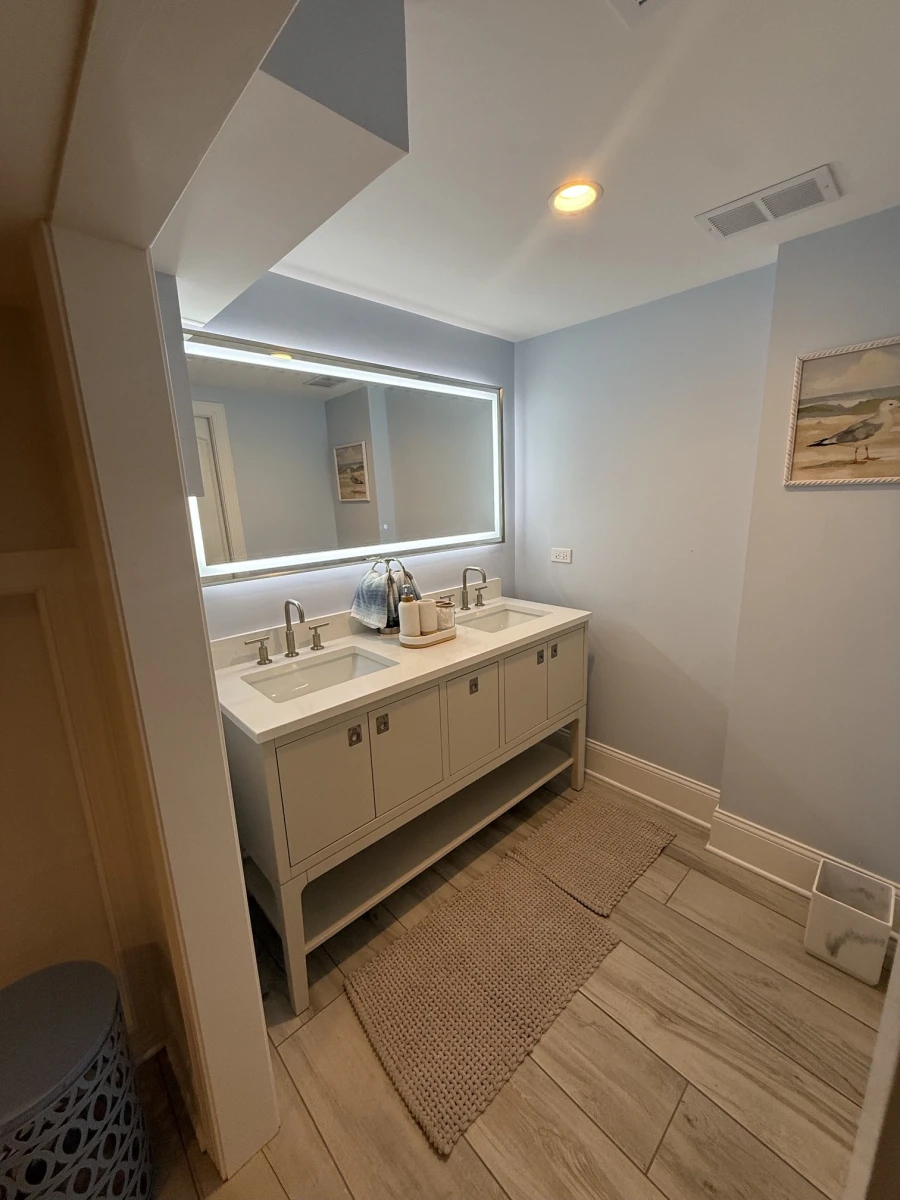
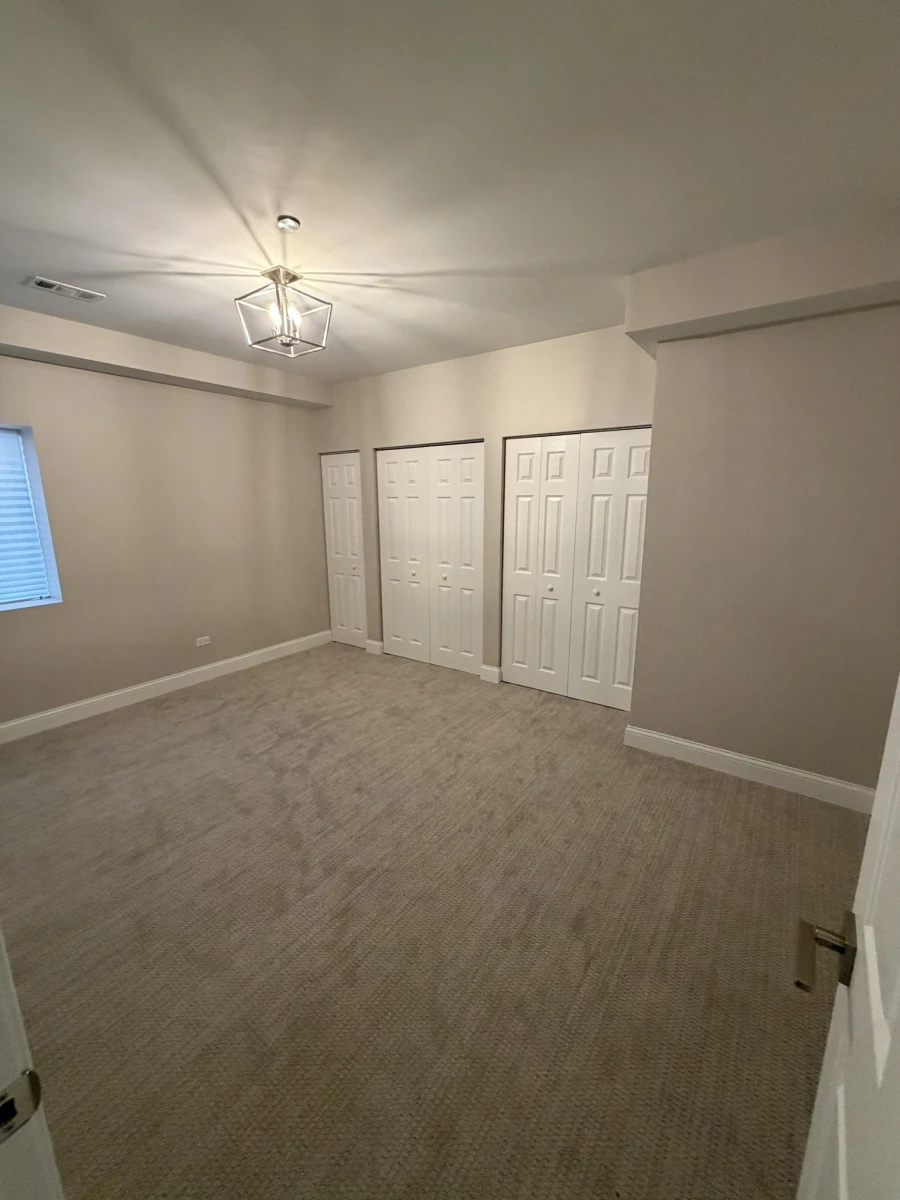
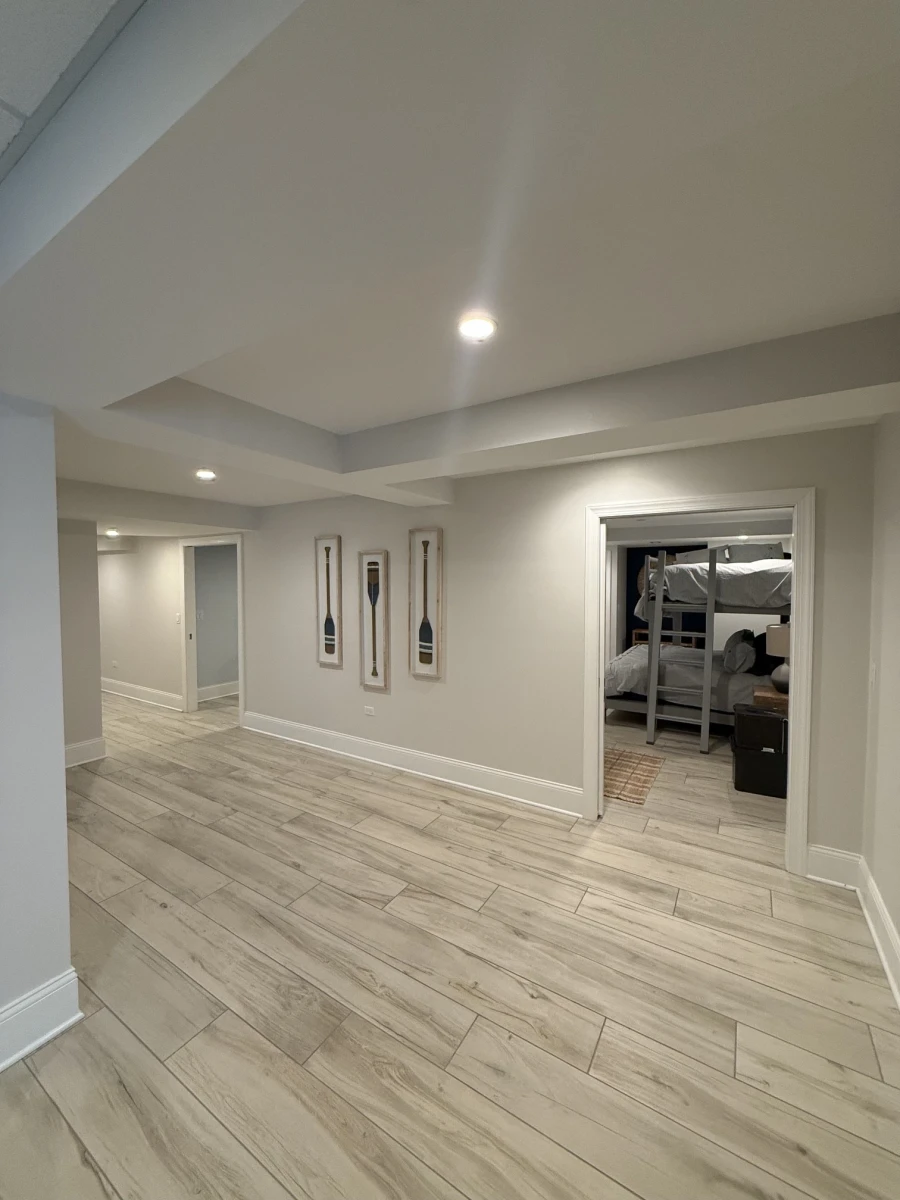
We run a roofing directory, so we see the first half of this story every day. For the second half, we feature the work of a Chicago family remodeler. S.R.C Home Repair and Remodel relaunched in October 2026, and every job photo below is theirs.
Seven Steps, in the Order That Works
Order matters more than skill. A perfect patch over wet insulation fails. A fresh coat of paint over a live stain fails. Follow the list top to bottom.
- Stop the water. Get the roof patched or tarped first. In Chicago, a patch on up to 25 percent of a roof surface needs no building permit, per the Department of Buildings.
- Cut the power near the wet spot. Turn off the breaker for any light or fan in the stained area. Water and a ceiling box do not mix.
- Take photos before you touch anything. Shoot the stain, the attic and the roof. Then call your insurer. Photos made before cleanup are the ones an adjuster trusts most.
- Dry it fast. Run fans and a dehumidifier. Pull back attic insulation that got soaked. The EPA window is 24 to 48 hours.
- Decide what stays. Press the stain. Hard and flat can stay. Soft, bubbled, sagging or crumbling comes out, back to the joists.
- Check the age of the house. Built before 1978? Old paint may hold lead. Read the plaster section below before anyone sands.
- Patch, prime and paint. Seal any stain with a stain blocking primer, then paint the whole ceiling. A spot of new paint on an old ceiling always shows.
Drywall steps like these match the ones the tool maker Hyde lays out in its ceiling repair guide. Most repair guides leave out the order, the paperwork and the rules in your city. Those come next.
Save It or Cut It Out
You can judge most ceilings in two minutes with a flashlight and a fingertip. Use the table, then call a pro for anything in the bottom rows.
| What you see | What it means | The usual fix |
|---|---|---|
| A ring, but hard and flat | Water passed through and dried | Stain blocking primer, then paint the whole ceiling |
| Bubbled or peeling paint | Water sat behind the paint | Scrape, let it dry fully, prime, paint |
| Soft or sagging drywall | The gypsum is soaked through | Cut back to the joists and patch |
| Brown drip lines on a wall | Water ran down inside the wall | Open the wall low and check the insulation |
| Stained drop ceiling tiles | Porous tile soaked up the water | Replace the tiles. Do not paint them. |
| Mold larger than 10 square feet | A bigger job than a patch | Follow the larger EPA guide or hire a pro |
The EPA says porous items such as ceiling tiles and carpet may have to be thrown away once they turn moldy. It also says not to paint or caulk a moldy surface, because the paint will peel.
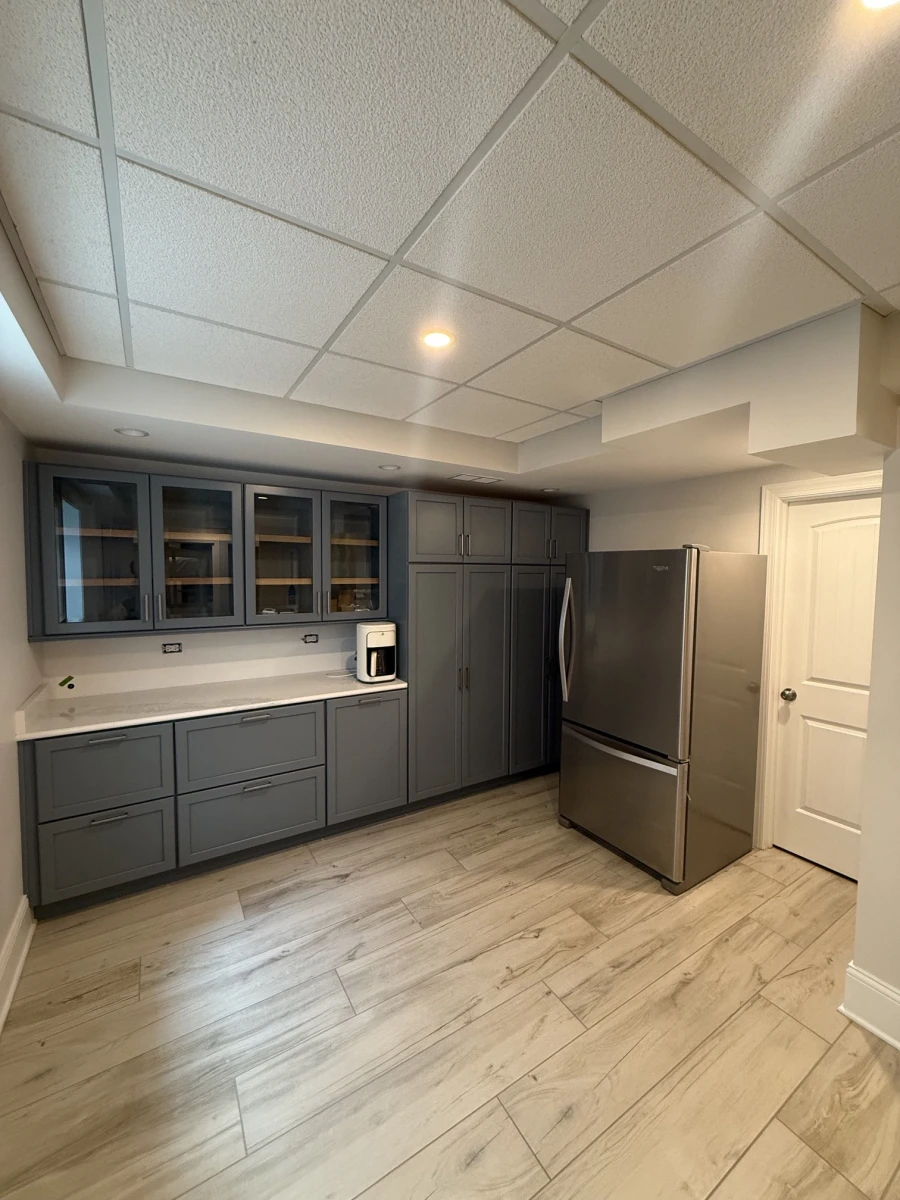
A drop ceiling is the easy case. Chicago lets you replace ceiling tiles or a drop ceiling in kind with no permit, as long as it is not part of a fire rated assembly.
Plaster Ceilings in Older Chicago Homes
Older homes often have plaster, not drywall. Plaster holds water longer and can let go of its lath in a sheet. If a plaster ceiling sags or sounds hollow when you tap it, keep people out of the room.
Age brings a second problem. The EPA says a home built before 1978 may have lead paint. Anyone paid to disturb paint in that home must be lead safe certified, per the EPA rule for contractors. The rule covers more than 6 square feet of paint per room inside.
Chicago adds its own layer. You can remove and replace up to 1,000 square feet of drywall or plaster with no building permit, as long as no electrical, plumbing or mechanical system changes. The work must still follow lead safe and asbestos rules. You may need to file a lead paint form with the Chicago Department of Public Health first, per the Department of Buildings.
Move a light, add a fan or touch a pipe while the ceiling is open, and that changes. Then it is permit work. Ask your contractor who pulls it before the job starts.
When the Water Reached the Basement
A slow roof leak can end up two floors down. Water runs along a pipe or a wall cavity and shows up as a damp corner, a swollen baseboard or a musty smell in the basement.
The fix for a basement is the same as for a ceiling, only bigger. Find the source. Dry it. Pull out anything soft or moldy. Only then do new walls go up.
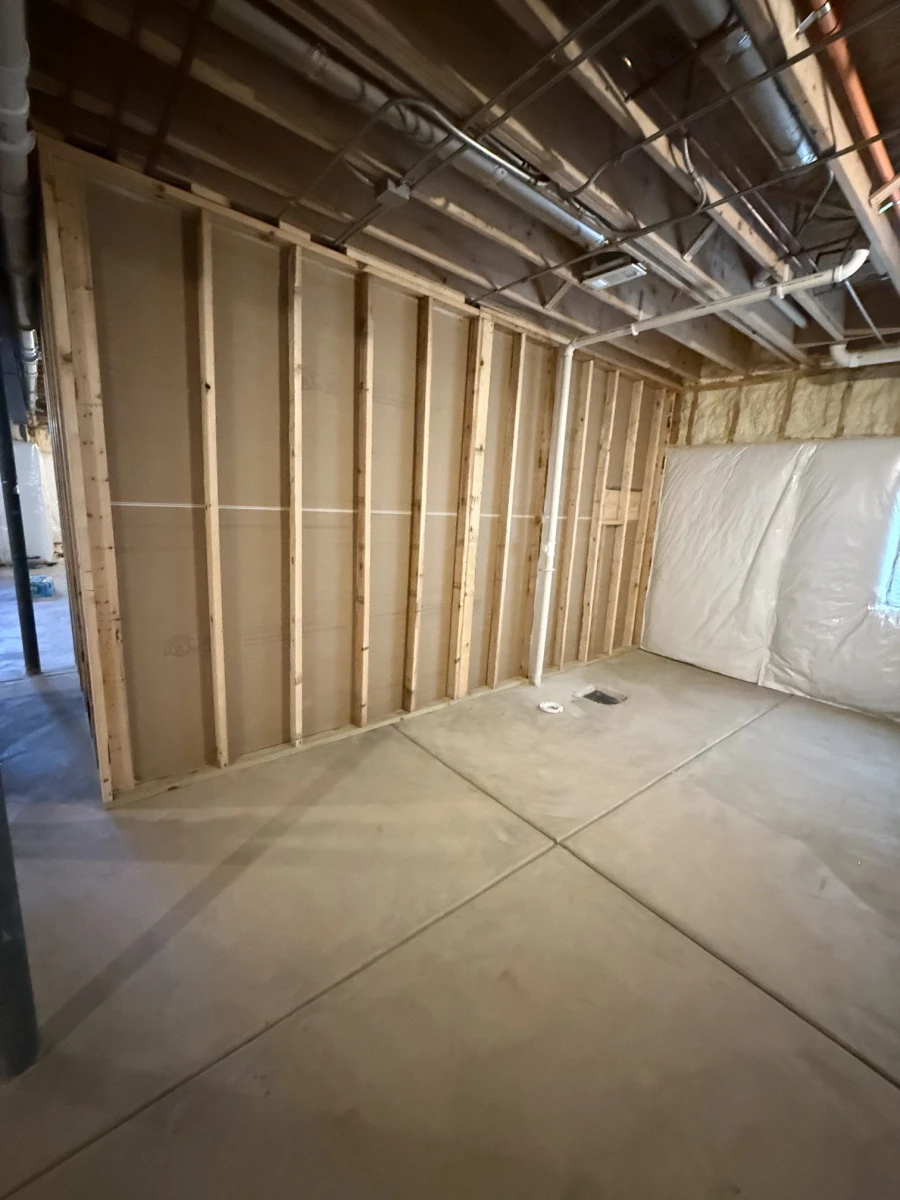
S.R.C says its basement work has moisture handled before the drywall goes up, per its own site. The framing photo below shows the stage where that matters, with studs and insulation open to view before a single sheet of drywall.
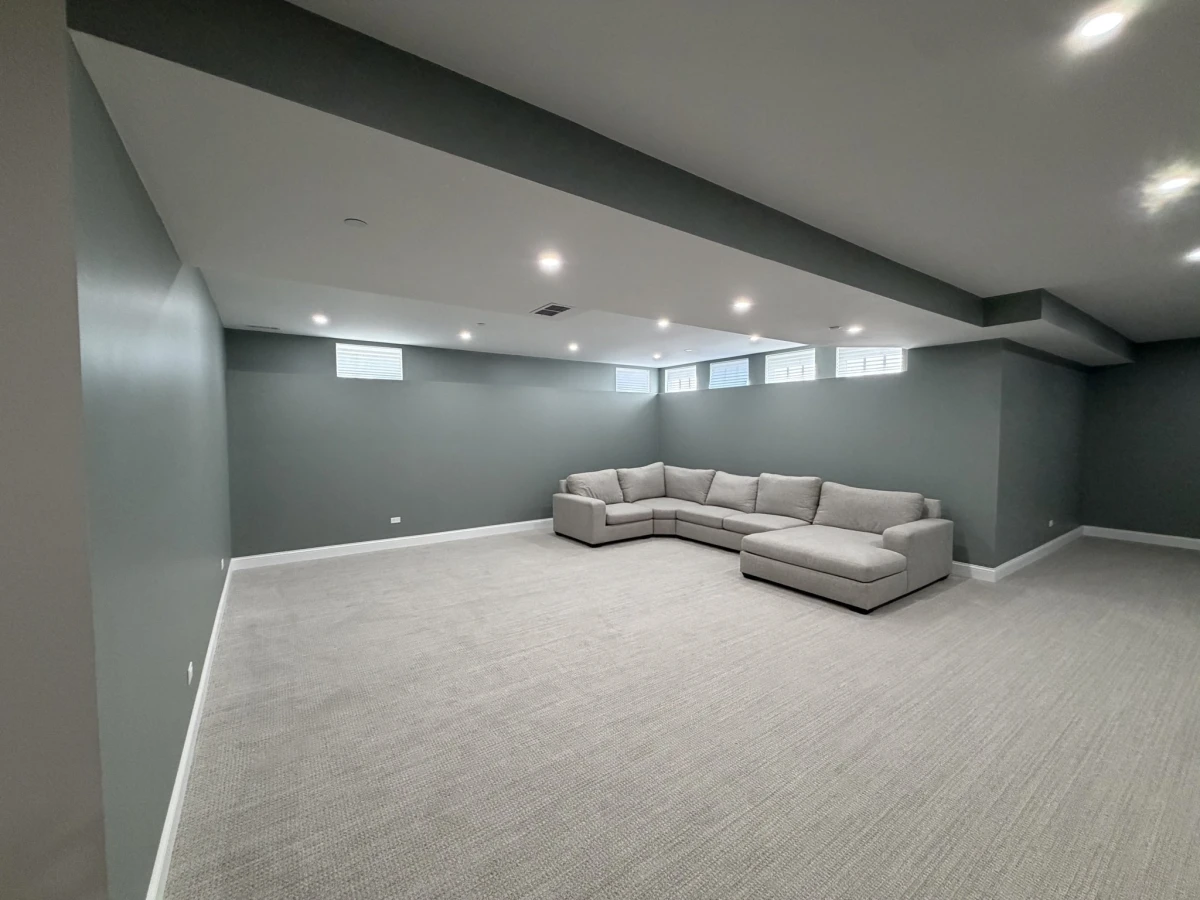
On Google, one reviewer wrote about a full basement remodel by S.R.C and said the team was professional and responsive, with real attention to detail. That review is one of two on its Google profile, both five stars, as of October 2026.
Insurance, Contracts and Illinois Law
Insurance first. A standard HO 3 policy treats seepage as a maintenance issue and does not cover it, per the Insurance Information Institute. It also says policies will not pay for damage from lack of maintenance or mold, and flood is excluded. A sudden storm leak and a leak you ignored for a year are two very different claims.
So act fast and keep proof. Photos, dates, the roofer invoice and the drying log all help show the damage was sudden.
Then the contract. Illinois has its own law for this, the Home Repair and Remodeling Act. On any job over 1,000 dollars, it says the contractor must give you a written contract before work starts.
- The contract must state the total cost, with parts and materials listed.
- It must state the business name and address.
- You must get the pamphlet called Home Repair, Know Your Consumer Rights, and sign an acknowledgment form.
- An arbitration clause or jury waiver must be pointed out to you, and you can reject it.
- The contractor must carry liability insurance of 100,000 dollars per person and 300,000 dollars per occurrence for bodily injury, plus 50,000 dollars for property damage, unless it has a net worth of 1,000,000 dollars or more.
A remodeler who skips the pamphlet is skipping the law. Our guide to spotting a bad roofing company covers the same warning signs on the roof side.
Featured Remodeler, S.R.C Home Repair and Remodel
S.R.C Home Repair and Remodel is a family owned remodeler with more than 20 years in the trade. The owner, Alvin Santos, runs the jobs. In October 2026 the company relaunched with a new website built around photos of its own work.
The crew does kitchens, bathrooms, basements and whole homes, plus flooring, painting, drywall, tile, paver walkways and patios, and commercial renovations. That range fits the second half of a leak. The ceiling, the wall and the basement can all go to one crew.
Every estimate starts with a free visit in your home and a written scope and price, with no obligation. S.R.C pulls the permits a job needs and schedules the inspections with your city or village. It answers texts and calls 24 hours a day at (331) 203-2461.
S.R.C works in Chicago, Cicero, Itasca, Addison, Elmhurst, Glenview, Broadview, Northlake, Westchester, Melrose Park, Franklin Park and Schiller Park.


Roof First, Then the Room
We list roofers, and the right roofer stops the water. That part comes first, always. In the Chicago area, start with the Chicago roofers in our directory. Read our guide to flashing, the part that actually leaks, before you sign.
Then call someone for the inside. Dry it, judge it, fix it in order, and get the contract in writing. A ceiling done that way looks like the leak never happened.
Where to Verify
A Brief Guide to Mold, Moisture and Your Home, US Environmental Protection Agency
Lead Safe Renovations for DIYers, US Environmental Protection Agency
Renovation, Repair and Painting Program, Contractors, US Environmental Protection Agency
What Types of Work Do Not Require a Building Permit, City of Chicago Department of Buildings
Home Repair and Remodeling Act, 815 ILCS 513, Illinois General Assembly
Am I Covered, Insurance Information Institute
Which Disasters Are Covered by Homeowners Insurance, Insurance Information Institute
How to Repair Drywall Ceiling Water Damage the Right Way, Hyde Tools
What Buyers Want to Know
Can a water damaged ceiling be fixed?
Yes, in most cases. If the drywall is still hard and flat, seal the stain and repaint. If it is soft, bubbled or sagging, cut that section out to the joists and patch it.
Can you just paint over a water damaged ceiling?
Only after it is dry and only with a stain blocking primer first. Regular paint lets the stain bleed back through. Never paint over mold. The EPA says paint on a moldy surface will peel.
Will homeowners insurance cover water damage to a ceiling?
Often, when the damage was sudden, like a storm leak. Policies usually exclude seepage, lack of maintenance and mold. Take photos early and keep the roofer invoice.
Do I need a permit to fix a ceiling in Chicago?
Usually not for the ceiling alone. Chicago allows up to 1,000 square feet of drywall or plaster to be replaced with no permit, if no electrical, plumbing or mechanical work changes.
Who do I call for a water damaged ceiling?
A roofer first, to stop the water. Then a remodeler or drywall contractor for the ceiling. For mold over 10 square feet, the EPA points you to its larger guide or a professional.
How long does a ceiling take to dry after a roof leak?
Aim for 24 to 48 hours with fans and a dehumidifier. That is the EPA window to prevent mold. Wet insulation above the ceiling may need to come out to dry.