Home Learn Will Roofing Prices Increase in 2026? What Changed
Buying 9 minute readWill Roofing Prices Increase in 2026? What Changed
By Anthony Limpert, Founder, published October 15, 2026
They already did. Here is how much, month by month from federal price data, what is pushing it, and how to keep the next hike off your bid.
Yes, and it already happened. Factory prices for asphalt shingles rose 8.5 percent from March to August 2026, right after the big shingle makers raised prices twice. Nobody can promise what comes next, but for three years running the cheap stretch has been winter and the jump has come in spring.
At a glance
- Owens Corning raised shingle prices 5 to 8 percent on April 1, 2026 and 6 to 9 percent more on June 1. GAF raised 6 to 9 percent on June 1.
- Steel mill prices were up 23.4 percent in a year, lumber 11.8 percent and plywood 10.7 percent. That hits metal roofs and roof decking.
- Roofer pay rose 3.5 percent in a year, a little faster than prices in general.
- In each of the last three years, shingle prices at the factory bottomed out between January and April.
- Your best defense is a written price with a hold date, not a guess about the market.
The Short Answer for 2026
We list roofers, so we watch what homeowners are about to pay them. And one question keeps coming up in the fall of 2026. Did roof prices go up this year, and are they going up again?
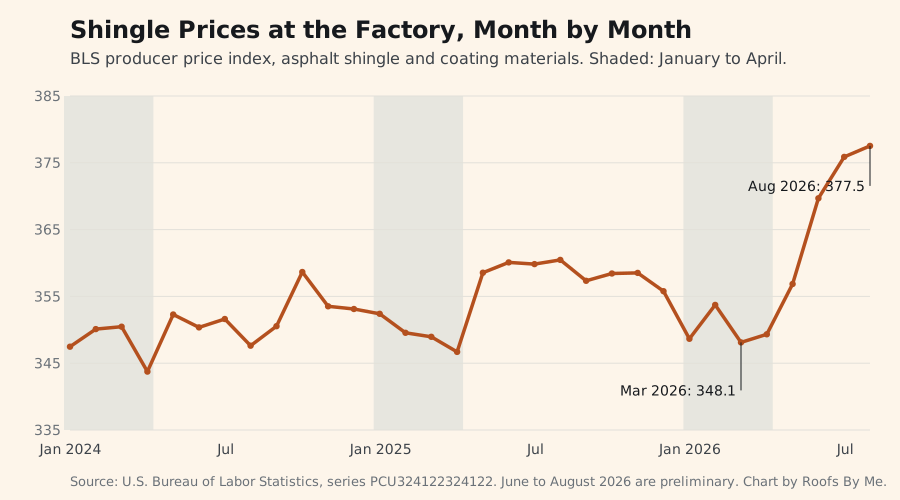
Yes, they went up. The federal producer price index for asphalt shingle and coating materials tracks what the makers charge. It sat at 348.1 in March 2026 and hit 377.5 in August 2026, per the Bureau of Labor Statistics. That is an 8.5 percent jump in five months. It is the highest reading in the three years we charted below.
Over a full year the rise looks smaller, 4.7 percent from August 2025. That is because prices sagged last winter before they climbed. Both numbers are true. The one that matters for your bid is the recent one, because your roofer buys at today's price.
One fair warning. The June, July and August 2026 index values are marked preliminary, and BLS can revise them for up to four months. We pulled them on October 12, 2026.
Why Prices Went Up This Year
Most pages on this question say costs are rising and stop there. Here is what actually moved, with the receipts.
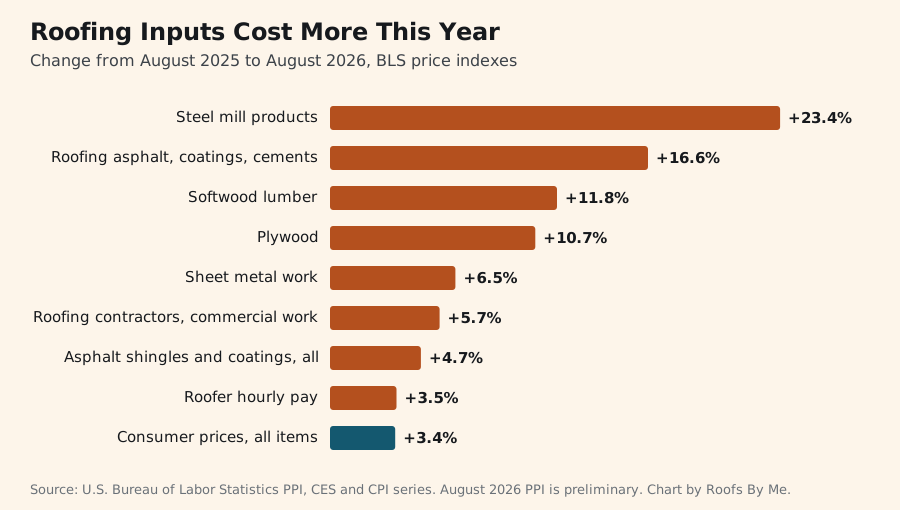
- The shingle makers raised prices twice. Owens Corning told its customers on February 11, 2026 that all shingle and accessory prices would rise 5 to 8 percent on April 1. On April 22 it announced another 6 to 9 percent for June 1. GAF announced 6 to 9 percent on shingles and accessories for June 1 too. Both letters are posted on the Mid Atlantic Roofing Supply price page, next to spring letters from more than a dozen other makers.
- Steel got a lot more expensive. The steel mill products index rose 23.4 percent from August 2025 to August 2026, per BLS. The tariff on imported steel and aluminum went from 25 to 50 percent on June 4, 2025, per the White House proclamation. Metal panels, flashing and drip edge all start as steel or aluminum.
- Wood went up. Softwood lumber rose 11.8 percent and plywood 10.7 percent in the same year, per BLS. A 10 percent tariff on imported softwood lumber took effect October 14, 2025, per the lumber proclamation. If your roof needs new decking, this is your line item.
- Oil spiked. Shingles are made with asphalt, and asphalt comes from crude oil. Roofing Contractor reported on May 13, 2026 that crude prices jumped 11.3 percent in April alone. The index for roofing asphalts, coatings and cements, the stuff on flat roofs and in repairs, is up 16.6 percent in a year.
- Crews cost more. Roofers earned 38.56 dollars an hour on average in August 2026, up from 37.27 dollars a year earlier, per BLS. That is 3.5 percent. Prices in general rose 3.4 percent over the same year, per the consumer price index.
What Moved, in One Table
Here is the same data as a table, with the longer view next to it. The last column runs from August 2019, before the pandemic, to August 2026. It shows why a roof that cost one price before 2020 costs a lot more now.
| What it measures | Past year | Past two years | Since August 2019 |
|---|---|---|---|
| Asphalt shingles and coatings, at the factory | 4.7 percent | 8.6 percent | 49.8 percent |
| Roofing asphalts, coatings and cements | 16.6 percent | 18.6 percent | Not charted |
| Steel mill products | 23.4 percent | 38.5 percent | 92.4 percent |
| Sheet metal work | 6.5 percent | 11.7 percent | Not charted |
| Softwood lumber | 11.8 percent | 18.0 percent | 36.8 percent |
| Plywood | 10.7 percent | 12.7 percent | Not charted |
| What roofers charge for commercial work | 5.7 percent | 9.8 percent | 68.8 percent |
| Roofer average hourly pay | 3.5 percent | 9.0 percent | 37.7 percent |
| Consumer prices, all items | 3.4 percent | Not charted | 30.6 percent |
Two things jump out. Since 2019 shingles at the factory are up about half, while prices in general are up about a third. And the price roofers charge for commercial work is up more than two thirds. BLS does not publish a home roofing price index, so that commercial line is the closest federal read on what the labor and overhead cost.
None of these are your price. They are what the inputs cost. A roofer's bid also carries the crew, the permit, the dump fees, insurance and profit. But when the inputs climb like this, the bids follow.
Will Prices Go Up Again in 2027?
No one can promise you a number, and you should doubt anyone who does. What we can show you is the pattern.
In each of the last three years, the BLS shingle index hit its low between January and April. It bottomed at 343.7 in April 2024, 346.7 in April 2025 and 348.1 in March 2026. Then it jumped. From April to May it rose 2.5 percent in 2024 and 3.4 percent in 2025, and in 2026 it climbed 8.1 percent from April to August. That lines up with the spring letters from the makers.
It also falls back some in winter. From August 2025 to January 2026 the index dropped 3.3 percent. So prices do come down a little in the off season. They just have not come back to where they were.
The people who track this for builders are not calling for relief soon. ABC chief economist Anirban Basu said in July 2026 that more materials price escalation is likely in the coming months, per Construction Dive. The steel and lumber tariffs above are not the kind of cost that melts away on its own.
Our read, and it is only a read, is that the safe bet is higher prices again by next summer. Plan for it, and do not plan on a drop.
What a Hike Does to a Real Bid
Here is a worked example with made up round numbers, so you can see the math. Say a shingle roof bid is 20,000 dollars, and 8,000 dollars of that is materials.
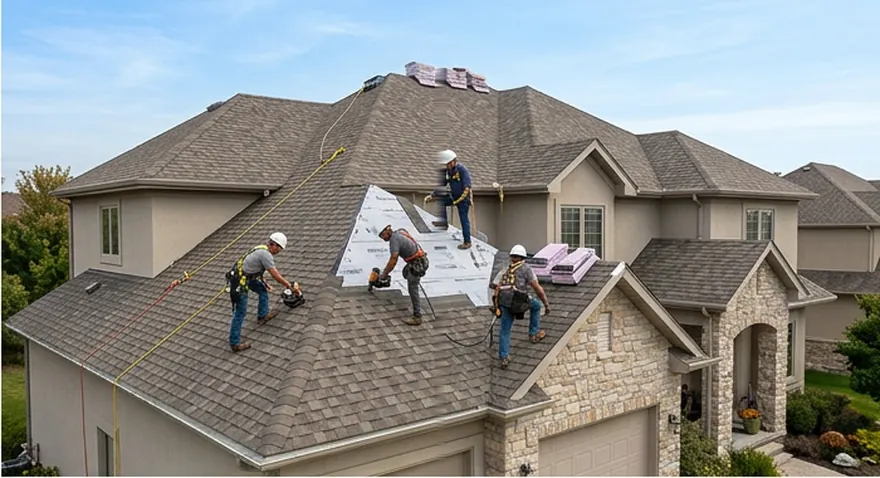
- Materials go up 8.5 percent, like the factory index did from March to August 2026. That adds about 680 dollars.
- The other 12,000 dollars goes up 3.5 percent, like roofer pay did. That adds about 420 dollars.
- Together that is about 1,100 dollars, or 5.5 percent, between one spring and the next fall.
Your split will differ. A tile or metal roof is heavier on materials, and a roof with bad decking leans on wood prices. Ask your roofer to show materials and labor as separate lines. Our guide to reading a roofing estimate shows what each line should say.
How to Keep the Next Hike Off Your Bid
You cannot control the market. You can control the paper. These are the moves that work.
- Get the price hold date in writing. Roofing distributors often hold pricing for about 30 days, a supplier told Roofing Contractor in May 2026. Ask how long your bid is good for and get that date on the page.
- Ask when materials get ordered. A roofer who orders right after you sign locks in that price. One who orders the week before the job may come back with a change order.
- Read any price change clause. Some contracts let the roofer raise the price if materials go up. Know if yours has one, how much it can add, and what proof the roofer has to show you.
- Get quotes in the slow months. The factory index has been lowest from January to April three years running. Get bids early, before the spring letters hit.
- Do not wait on a leak to save money. Water in the decking turns a reroof into a reroof plus new wood, and wood was up 10 to 12 percent in the year to August 2026, per BLS. A failing roof now beats a cheaper roof later.
- Compare bids on the same scope. A low bid in a rising market often skips something. Make sure each one names the same shingle line, underlayment, flashing and permit.
In California, remember the deposit cap. The state license board allows no more than 10 percent of the price or 1,000 dollars, whichever is less, as a down payment. A roofer asking for half up front to beat a price hike is asking for something the law does not allow. Our guide to spotting a bad roofing company covers that and eleven more warning signs.
Metal, Tile and Flat Roofs Are Moving Differently
Shingles get the headlines, but the other roof types have their own story this year.
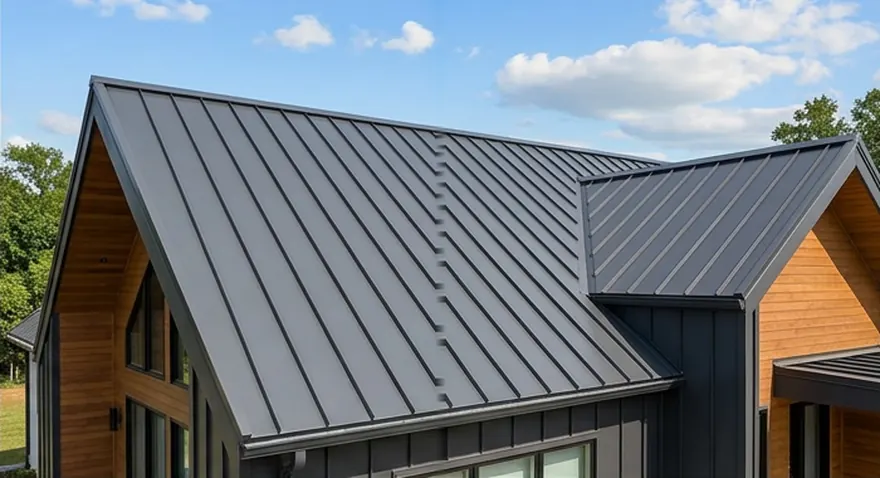
Metal roofs carry the biggest risk. As of August 2026, BLS steel mill prices were up 23.4 percent in a year and 38.5 percent in two. The index for sheet metal work rose less, 6.5 percent in a year, but the pressure is still upstream. If you want a metal roof, a fast written price matters most here.
Flat roofs and repairs lean on roofing asphalts, coatings and cements. That BLS index was up 16.6 percent in the year to August 2026, the biggest jump on the asphalt side. Coatings and patch materials cost more than they did last fall.
Tile roofs are their own case. A tile job often reuses sound tile and replaces the layers under it, so the bid leans on labor and underlayment. Ask your roofer which parts are new and which are reused. If you live with a tile roof, our tile roof guide covers how to keep it in good shape.
The Bottom Line
Roofing prices rose in 2026, mostly in the late spring, and the forces behind it are still in place. If your roof is fine, get bids in the quiet months and lock a price in writing. If your roof is failing, fix it now, because waiting has cost more every year since 2019.
When you are ready, start with the roofers in our roofing directory, check each license, and get three written bids on the same scope.
Sources
- Producer price index, asphalt shingle and coating materials manufacturing, U.S. Bureau of Labor Statistics
- Producer price index, roofing asphalts and pitches, coatings and cements, U.S. Bureau of Labor Statistics
- Producer price index, steel mill products, U.S. Bureau of Labor Statistics
- Producer price index, softwood lumber, U.S. Bureau of Labor Statistics
- Producer price index, roofing contractors, nonresidential building work, U.S. Bureau of Labor Statistics
- Average hourly earnings, roofing contractors, U.S. Bureau of Labor Statistics
- Price increase announcements and letters, Mid Atlantic Roofing Supply
- Roofing price increase, effective June 1, 2026, Owens Corning
- National price increase, residential roofing products, June 1, 2026, GAF
- Adjusting Imports of Aluminum and Steel Into the United States, The White House
- Adjusting Imports of Timber, Lumber, and Their Derivative Products, The White House
- Roofing Contractors Shorten Pricing Windows Amid New Construction Cost Surge, Roofing Contractor
- Finding the Right Contractor, California Contractors State License Board
- Construction input prices, June 2026, Construction Dive
Common questions
Will roofing prices increase in 2026?
They already did. The federal index for asphalt shingle materials rose 8.5 percent from March to August 2026, after Owens Corning and GAF raised shingle prices on June 1. Owens Corning also raised prices on April 1.
Are roof prices coming down?
A little in winter, not for good. The shingle index fell 3.3 percent from August 2025 to January 2026, then climbed past where it started. There is no sign yet of a lasting drop.
What is the cheapest month for roofing?
For materials, the shingle index hit its low between January and April in each of the last three years. That is the factory price, so your local weather and demand can still move the bid.
Why are roofs so expensive now?
Shingles at the factory cost about half again what they did in August 2019, steel nearly doubled, and roofer pay is up more than a third. Tariffs on steel and lumber and higher oil prices pushed 2026 higher still.
Should I wait to replace my roof until prices drop?
Only if the roof is sound. Prices have not gone back down after a jump in any of the last three years. A leak that rots the decking adds wood costs, and wood was up 10 to 12 percent in the year to August 2026.
How long is a roofing quote good for?
Ask, and get the date in writing. Many distributors hold material prices for about 30 days, so a bid older than a month may change. Find out when the materials get ordered.